Welcome toGuangdong Huihua Testing Technology Co., Ltd!

 2021.04.11Test Project
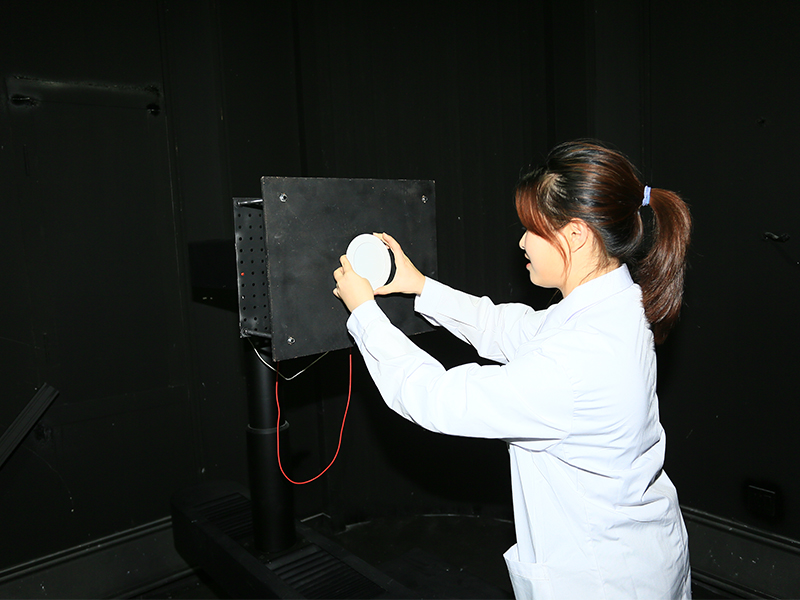
Principle of Light Distribution Testing
Distributed photometer is mainly used for measuring the photometric performance of lamps and light sources, that is, the distribution of photometric and chromatic values of lamp laser sources in different spatial directions. The distributed photometer has the following functions: light intensity distribution curve of the lamp, light intensity data, beam angle, total luminous flux, lamp efficiency, regional luminous flux, upward luminous flux, downward luminous flux, brightness distribution, utilization factor, brightness limit curve, glare level, maximum allowable distance ratio, equal illuminance curve, effective average illuminance curve, spatial color distribution, average color parameters, etc.
Light distribution testing items: electrical parameters: voltage, frequency, current, power, power factor; Light parameters (0-180/90-2709): luminous flux, luminous efficiency, central light beam angle, ratio of luminous flux within the angle range, and uniformity of color space distribution;
Main energy efficiency certification projects: DLC certification in the United States, Energy Star certification in the United States, DOE certification in the United States, CEC certification in California, ERP certification in the European Union, CECP certification in China, GEMS certification in Australia, KMEPS certification in South Korea, and Nrcai certification in Canada ..

Follow Huihua WeChat official account
Tel:13531757988 Fax:0760-85329844
Address:504 Dong'an North Road, Guzhen, Zhongshan City, Guangdong Province
Copyright:Guangdong Huihua Testing Technology Co., Ltd 粤ICP备15017184号 Technical Support:Zhongshan website construction
Guangdong Huihua Testing Technology Co., Ltd